Menopause & weight loss
Perimenopause and Menopause: Symptoms, Timeline, Weight Gain and How to Feel Like Yourself Again
If you've found yourself searching "why am I gaining weight in perimenopause?", "what are the symptoms of menopause?", or "when does perimenopause start?", you're certainly not alone.
Many women spend years feeling like something has changed in their body long before anyone tells them they're in perimenopause. They begin gaining weight around the middle, wake at 3am every night, feel anxious for no reason, struggle with brain fog, and no longer respond to the healthy habits that worked in their 20s and 30s.
The frustrating part? Blood tests often come back "normal."
Perimenopause can begin years before menopause itself, and because hormone levels fluctuate daily, many women are told they're too young or that everything looks fine.
Understanding what's happening is the first step towards taking back control.
What is Perimenopause?
Perimenopause is the transitional stage before menopause. During this time, your ovaries gradually begin producing less oestrogen and progesterone. Instead of declining in a straight line, these hormones fluctuate significantly from month to month.
Those hormonal ups and downs affect nearly every system in your body, including:
- Metabolism
- Blood sugar regulation
- Sleep
- Mood
- Brain function
- Muscle mass
- Bone health
- Energy levels
- Appetite
- Fat storage

When Does Perimenopause Start?
One of the biggest myths is that perimenopause starts in your late 40s. For many women, it begins much earlier. Most women enter perimenopause between their late 30s and mid-40s, although some notice changes as early as their mid-30s. The average length of perimenopause is 4-10 years, making it the longest hormonal transition many women experience. Early signs often include:
- Shorter or longer menstrual cycles
- Heavier periods
- Mood changes
- Increased anxiety
- Poor sleep
- Weight gain despite eating well
- Lower stress tolerance
Many women don't realise these are hormonal changes because their periods may still be regular.

Perimenopause Timeline
Every woman is different, but a typical timeline looks something like this.
Early Perimenopause
Usually late 30s to early 40s. Periods are still fairly regular but symptoms begin appearing. Common symptoms include:
- Anxiety
- Poor sleep
- PMS becoming worse
- Breast tenderness
- Migraines
- Fatigue
- Weight gain
- Brain fog
Mid Perimenopause
Hormones fluctuate more dramatically. Periods become less predictable. Symptoms often increase in intensity. Women frequently experience:
- Belly fat
- Hot flushes
- Night sweats
- Mood swings
- Low libido
- Insulin resistance
- Cravings
- Joint pain
- Muscle loss
Late Perimenopause
Periods become months apart. Symptoms may become stronger because oestrogen fluctuates dramatically. Many women experience:
- Heavy bleeding
- Long gaps between periods
- Sleep disturbances
- Depression
- Vaginal dryness
- Memory problems
- Fatigue
Menopause
Menopause is officially diagnosed after 12 consecutive months without a menstrual period. The average age is around 51, although it varies from woman to woman. After menopause, hormone levels remain consistently lower.
Perimenopause Symptoms
There are over 40 recognised symptoms of perimenopause. Some are well known, while others surprise many women. Common symptoms of perimenopause can include weight gain, particularly around the abdomen, hot flushes, night sweats, irregular, heavier, shorter or longer menstrual cycles, mood swings, anxiety, depression, panic attacks, brain fog, memory problems, fatigue, poor concentration, low motivation, insomnia, waking during the night (often around 3 am), heart palpitations, low libido, vaginal dryness, pain during sex, dry or itchy skin, dry eyes and mouth, hair thinning or hair loss, increased facial hair, acne, joint pain, muscle aches, frozen shoulder, headaches, migraines, dizziness, bloating, digestive changes, gum problems, electric shock sensations, tingling in the hands and feet, increased allergies, and changes in body odour. Not every woman experiences all of these symptoms, and both the type and severity can vary significantly throughout the perimenopause transition.
Why Does Perimenopause Cause Weight Gain?
Weight gain is one of the most common reasons women seek help during perimenopause.
Several biological changes occur at the same time.
Hormonal changes
Declining oestrogen affects where fat is stored. Instead of storing fat around the hips and thighs, women begin storing more around the abdomen.
Muscle loss
From around age 35 onwards, women naturally begin losing muscle if they don't actively maintain it. Less muscle means a slower metabolism.
Insulin resistance
Many women become more insulin resistant during perimenopause, making blood sugar regulation more difficult and increasing fat storage.
Poor sleep
Sleep deprivation increases hunger hormones and cravings while reducing energy and recovery.
Increased stress
Higher cortisol levels can increase appetite and encourage abdominal fat storage.

How to Navigate Perimenopause Successfully

Perimenopause doesn't have to mean feeling exhausted, gaining weight, or accepting that this is simply part of getting older. Small, consistent changes often make the biggest difference. Focus on these eight foundations:
1. Eat enough protein
Protein helps preserve muscle, supports metabolism and keeps you feeling fuller for longer.
2. Lift weights
Strength training is one of the most effective tools for maintaining muscle, improving insulin sensitivity and supporting bone health.
3. Balance blood sugar
Build meals around protein, fibre and healthy fats to reduce energy crashes and cravings.
4. Prioritise sleep
Good sleep supports hormone regulation, recovery and appetite control.
5. Reduce chronic stress
Managing stress supports cortisol regulation and can improve sleep, mood and weight management.
6. Support gut health
A healthy gut influences digestion, inflammation and hormone metabolism.
7. Stay hydrated
Hydration affects energy, concentration and overall wellbeing.
8. Work with your body, not against it
Extreme dieting and excessive cardio often make symptoms worse.
The goal isn't to punish your body. It's to support it through one of the biggest hormonal transitions of your life.
Weight gain is one of the most common reasons women seek help during perimenopause.
Several biological changes occur at the same time.
Hormonal changes
Declining oestrogen affects where fat is stored. Instead of storing fat around the hips and thighs, women begin storing more around the abdomen.
Muscle loss
From around age 35 onwards, women naturally begin losing muscle if they don't actively maintain it. Less muscle means a slower metabolism.
Insulin resistance
Many women become more insulin resistant during perimenopause, making blood sugar regulation more difficult and increasing fat storage.
Poor sleep
Sleep deprivation increases hunger hormones and cravings while reducing energy and recovery.
Increased stress
Higher cortisol levels can increase appetite and encourage abdominal fat storage.

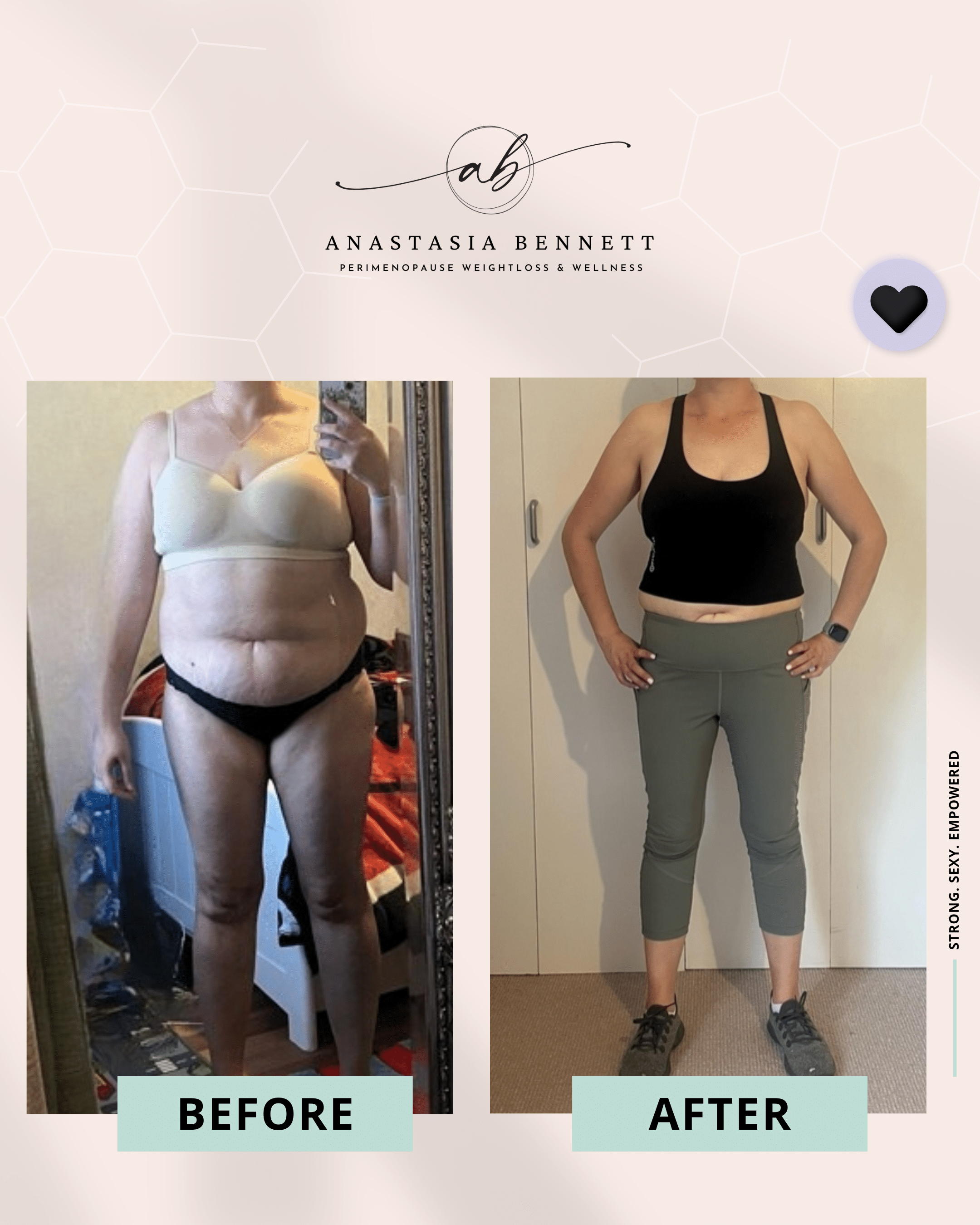
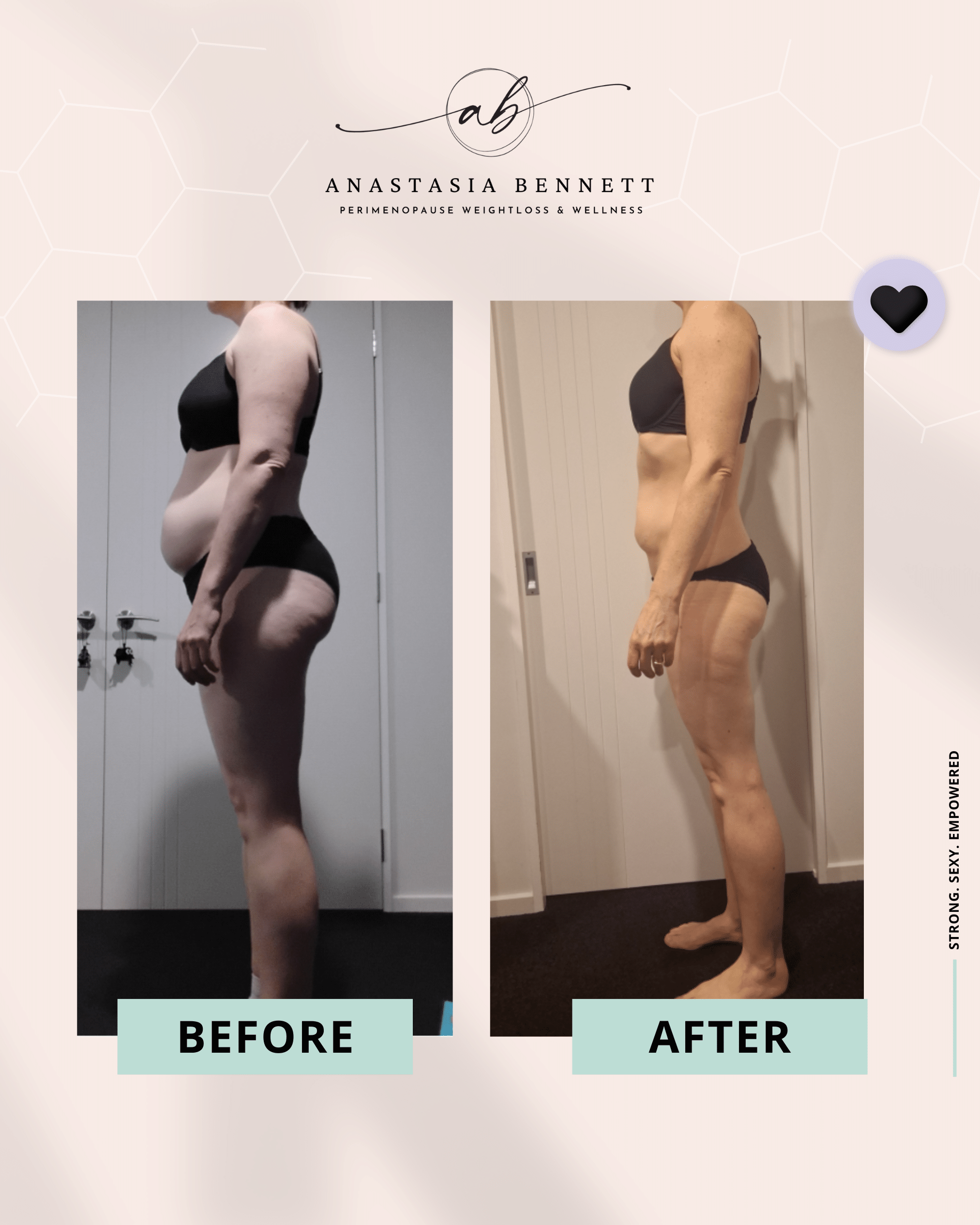
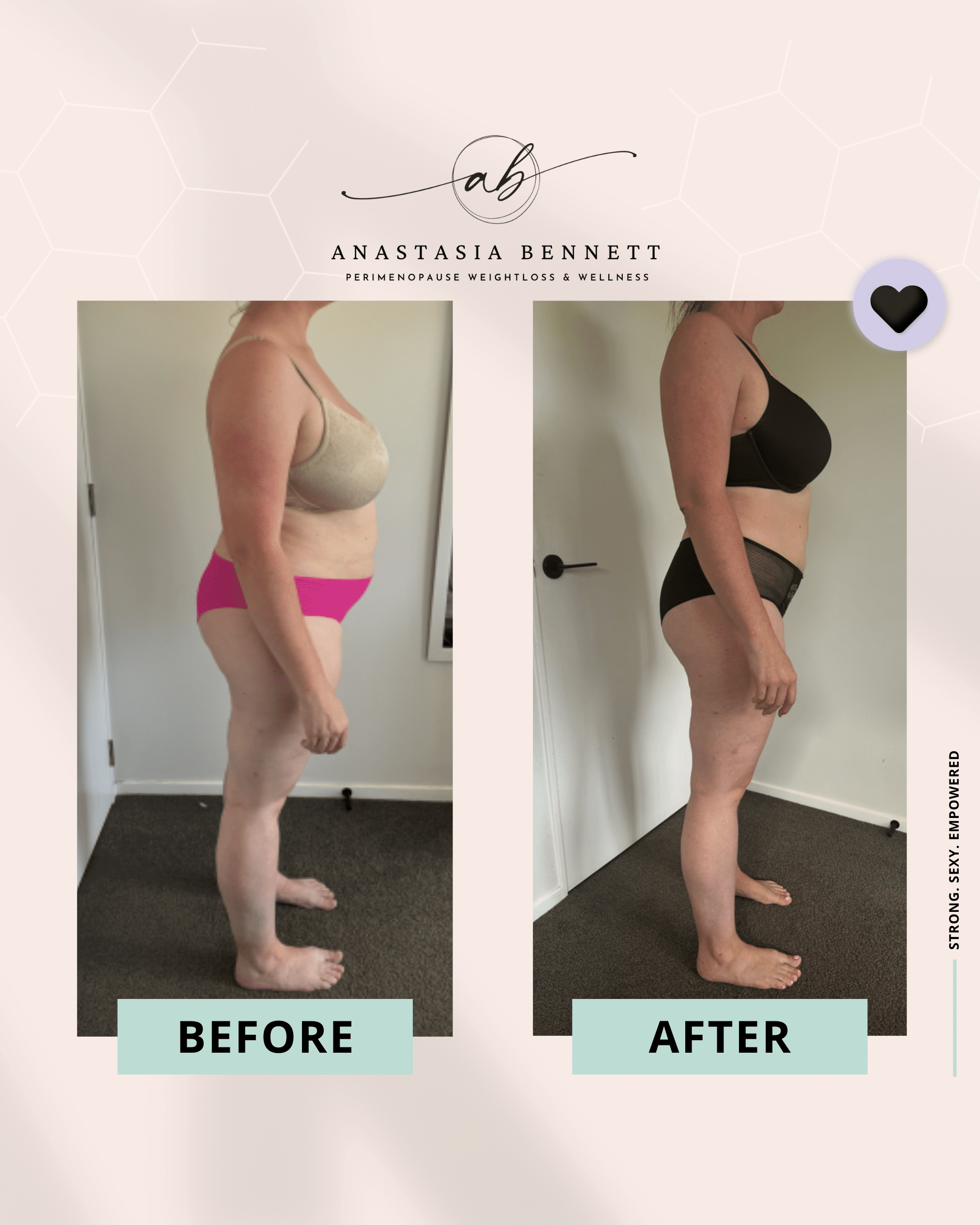
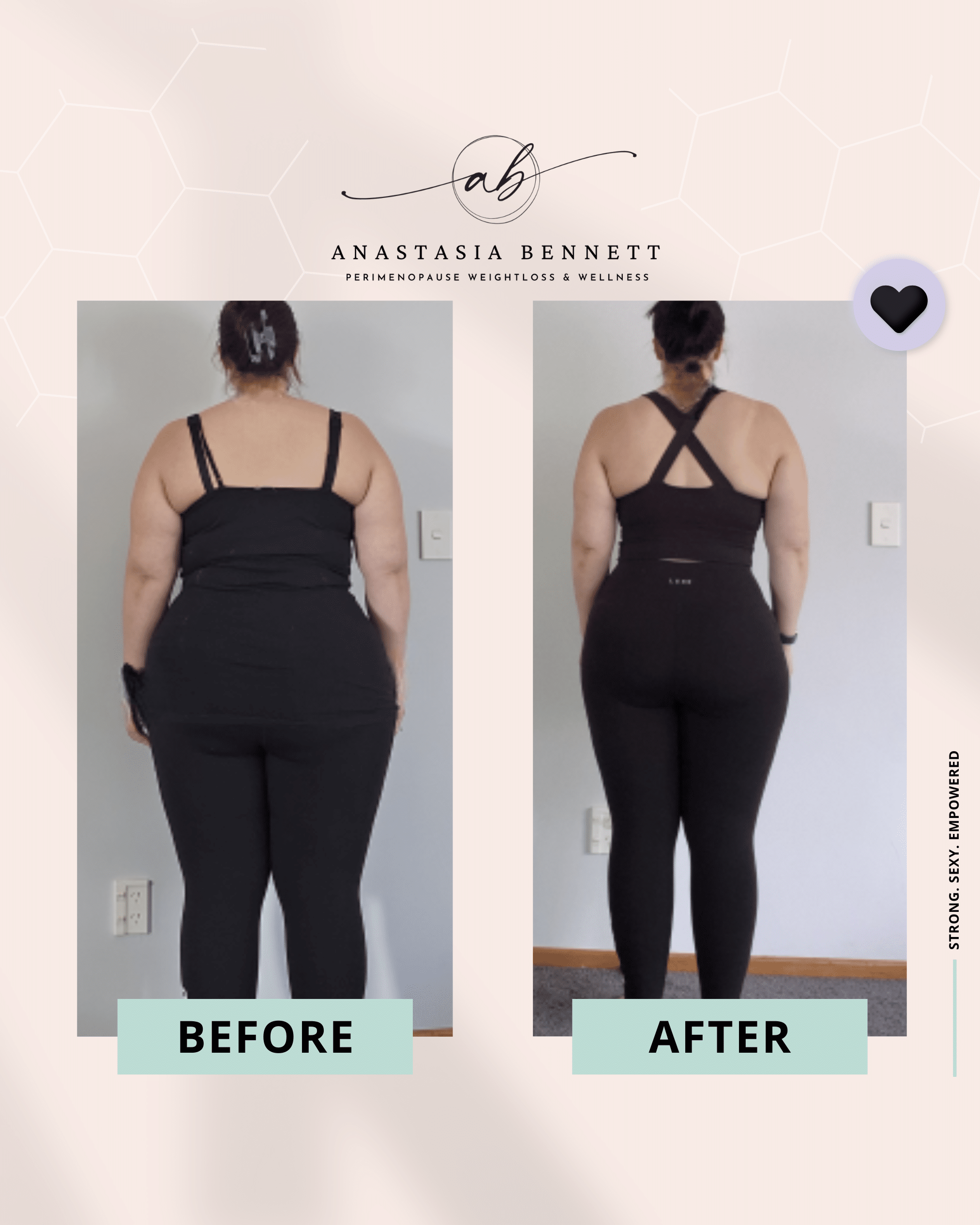
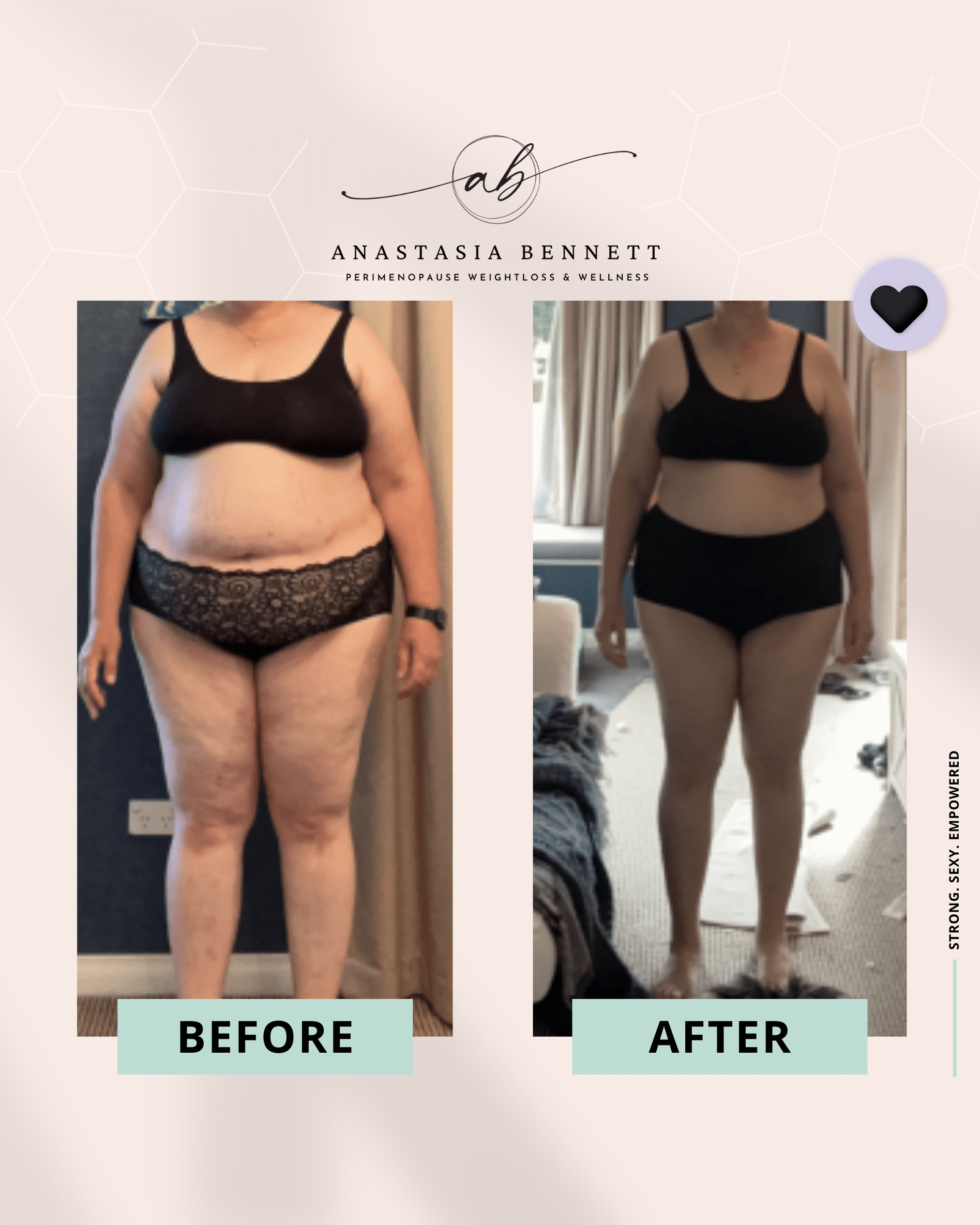
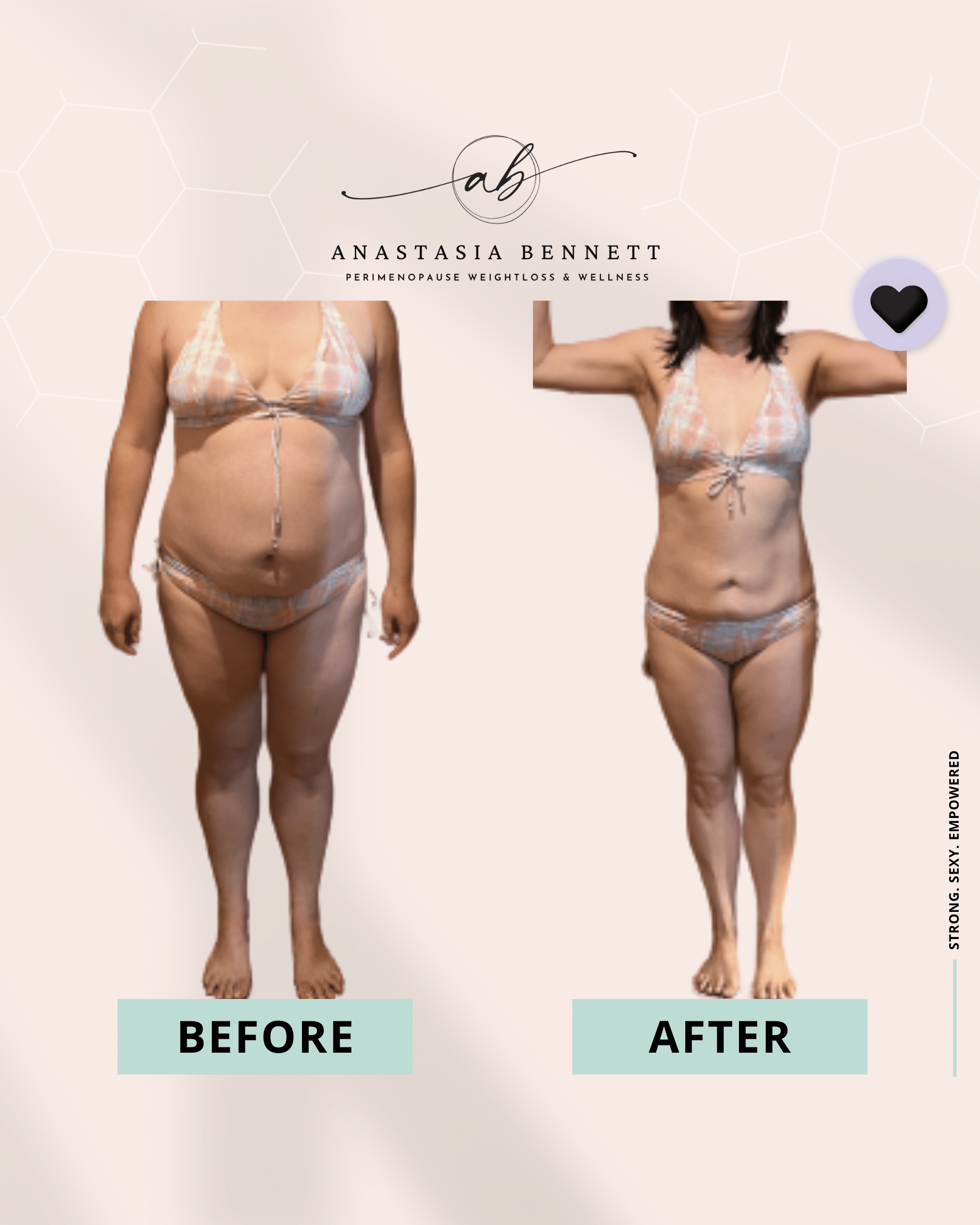
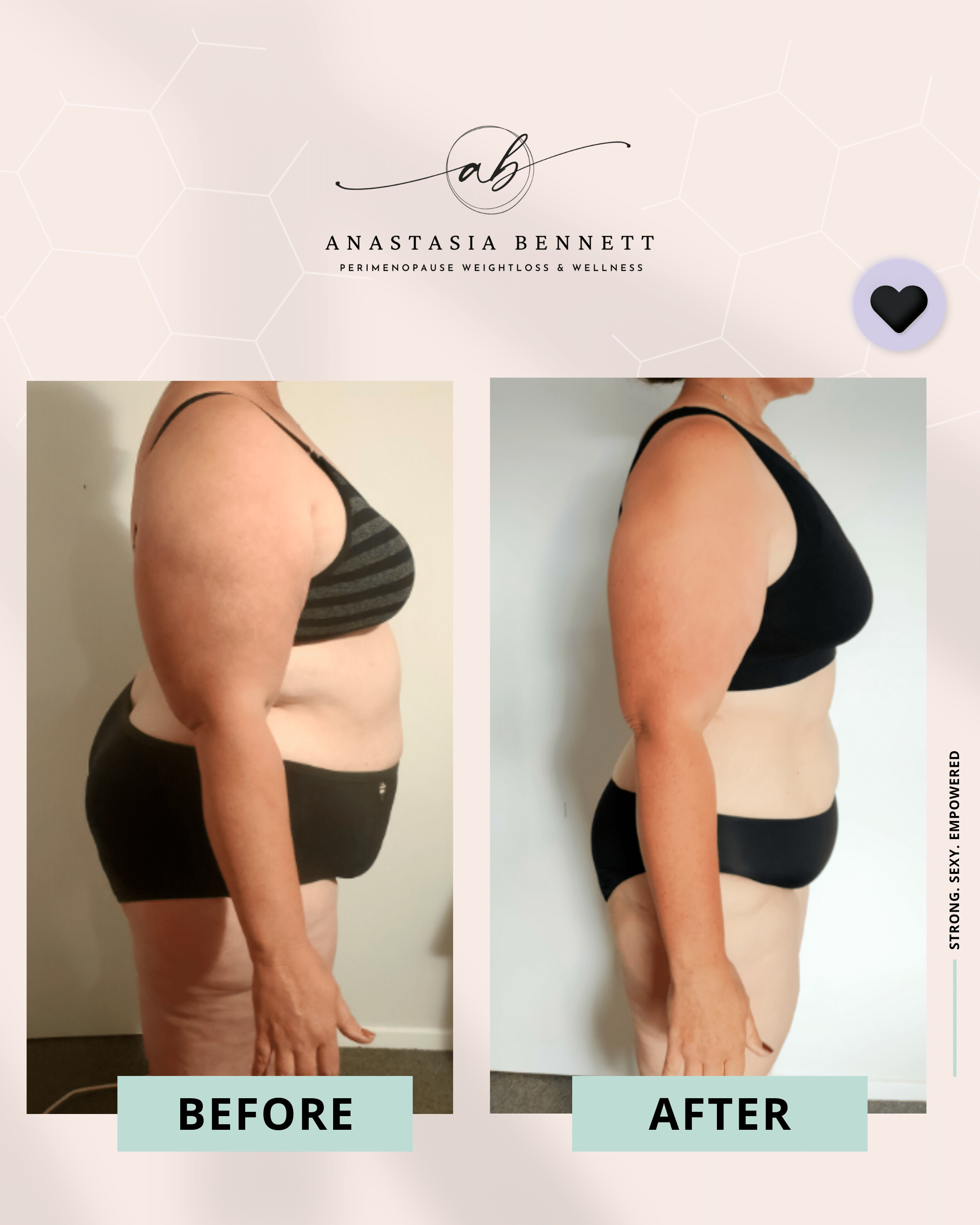
Amazing Results With My Coaching